
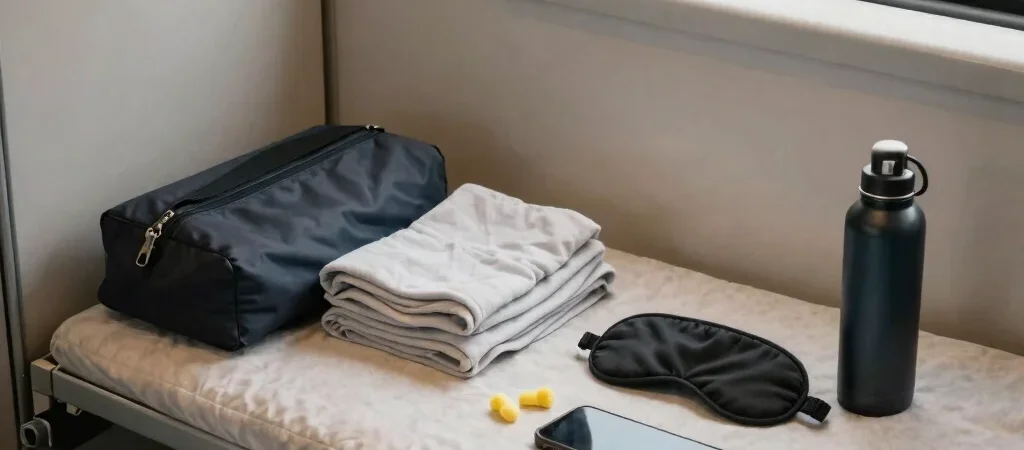
The awkward moment on an overnight train usually comes after you’ve settled in: your charger is in the bag overhead, your water is zipped inside your suitcase, and the corridor is too narrow to rummage comfortably. The answer isn’t packing more. It’s separating what you need while moving through the night from everything that can stay put.
Make a small night kit
Before boarding, put your ticket or booking details, passport, phone, charging cable, water, and any evening essentials in one compact bag. Keep it close enough to reach from your seat or berth without unpacking your main luggage. A soft pouch or small crossbody is easier to manage in a shared compartment than a tote that spills open.
Think about the route and the kind of accommodation you booked. A private sleeper and a shared couchette don’t offer the same space or privacy, so don’t assume there will be a convenient surface for every item. Keep valuables with you, and follow the operator’s guidance for securing luggage.
Dress for changing temperatures
A breathable base layer and a light layer you can remove are more useful than one heavy outfit. Train compartments can feel warm when crowded and cool later in the night, while station platforms may be exposed to wind or rain. Choose clothes that are comfortable sitting down and easy to adjust without turning the berth into a dressing room.
Earplugs and an eye mask can make shared spaces easier, but they don’t replace checking your stops and alarms before you sleep. Set a wake-up reminder with enough time to gather your things, especially if you have an early arrival. A quick check of the station sequence can help you wake with a plan instead of a scramble.
Keep the arrival simple
Put the first things you’ll need after arrival together: shoes, a light jacket, and any transit directions or tickets you’ve saved. If you’re changing trains, keep those details accessible rather than buried beneath your overnight clothes. The goal is to step onto the platform ready to move, even if you haven’t had a perfect night’s sleep.
We favor useful, modest gear over a special purchase for every journey; the right small bag is often one you already own. When this article includes affiliate links, travelwayfinder.blog may earn a commission at no additional cost to you. That never changes the value of checking the train operator’s luggage rules and choosing what suits your route.